

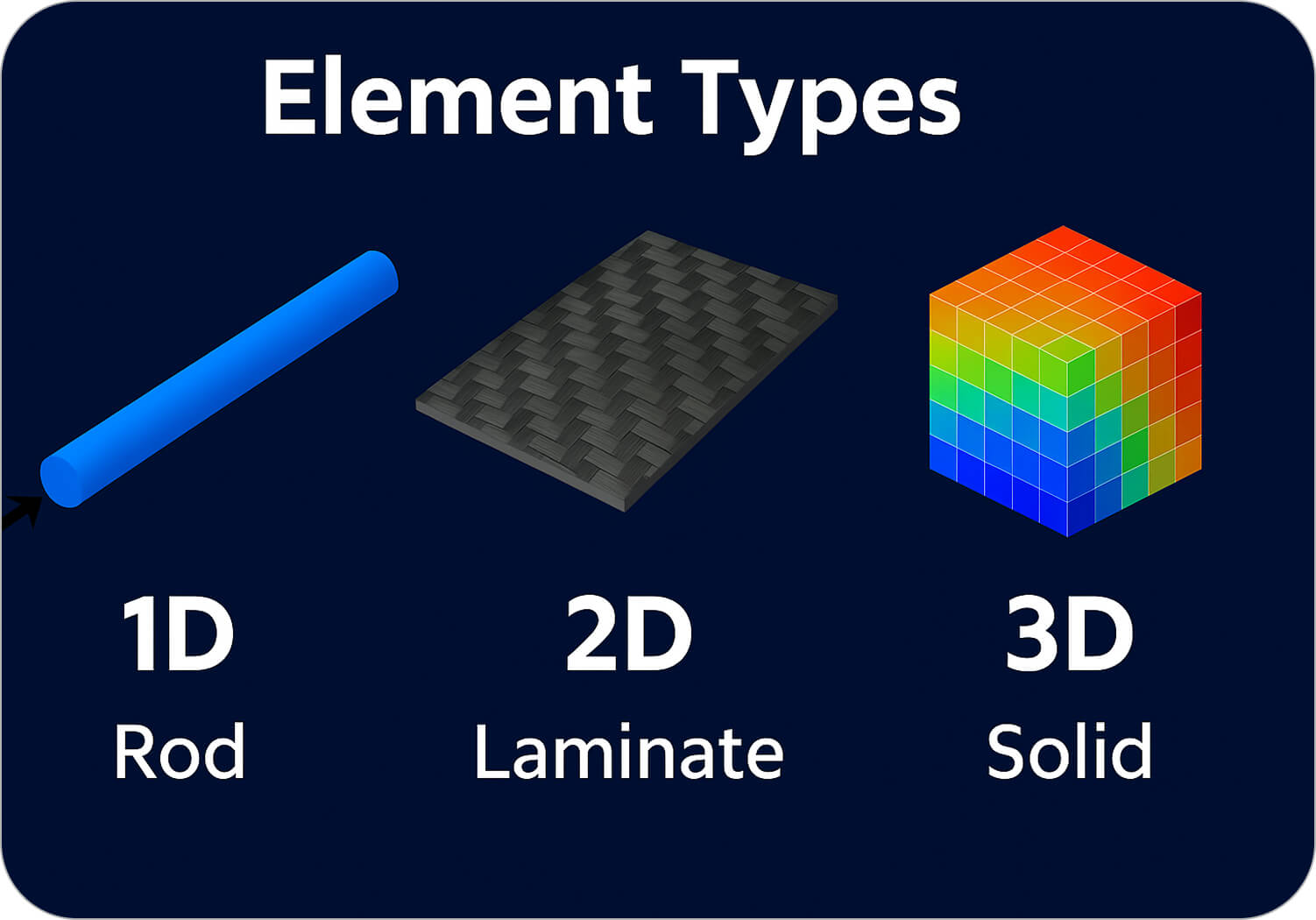
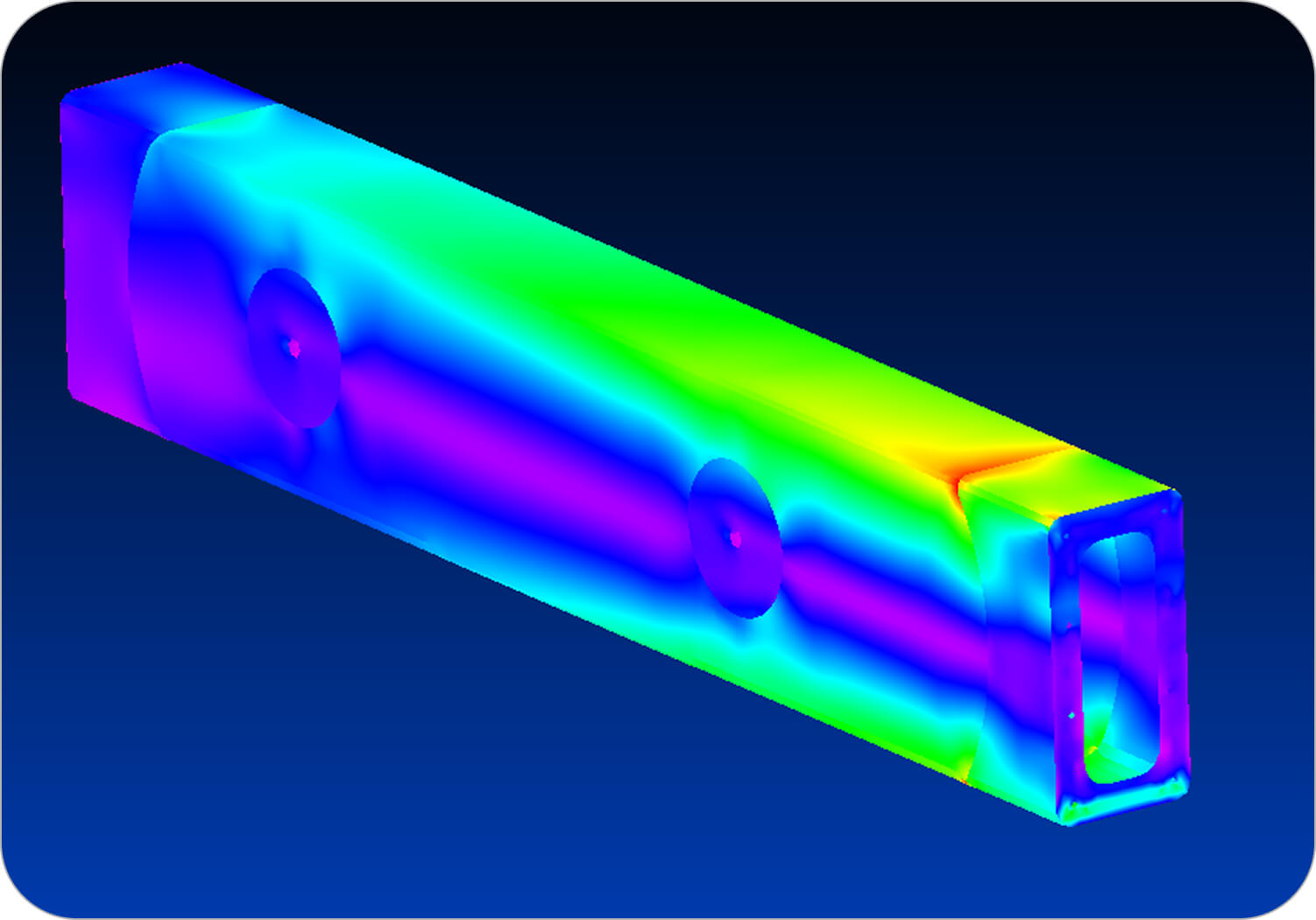
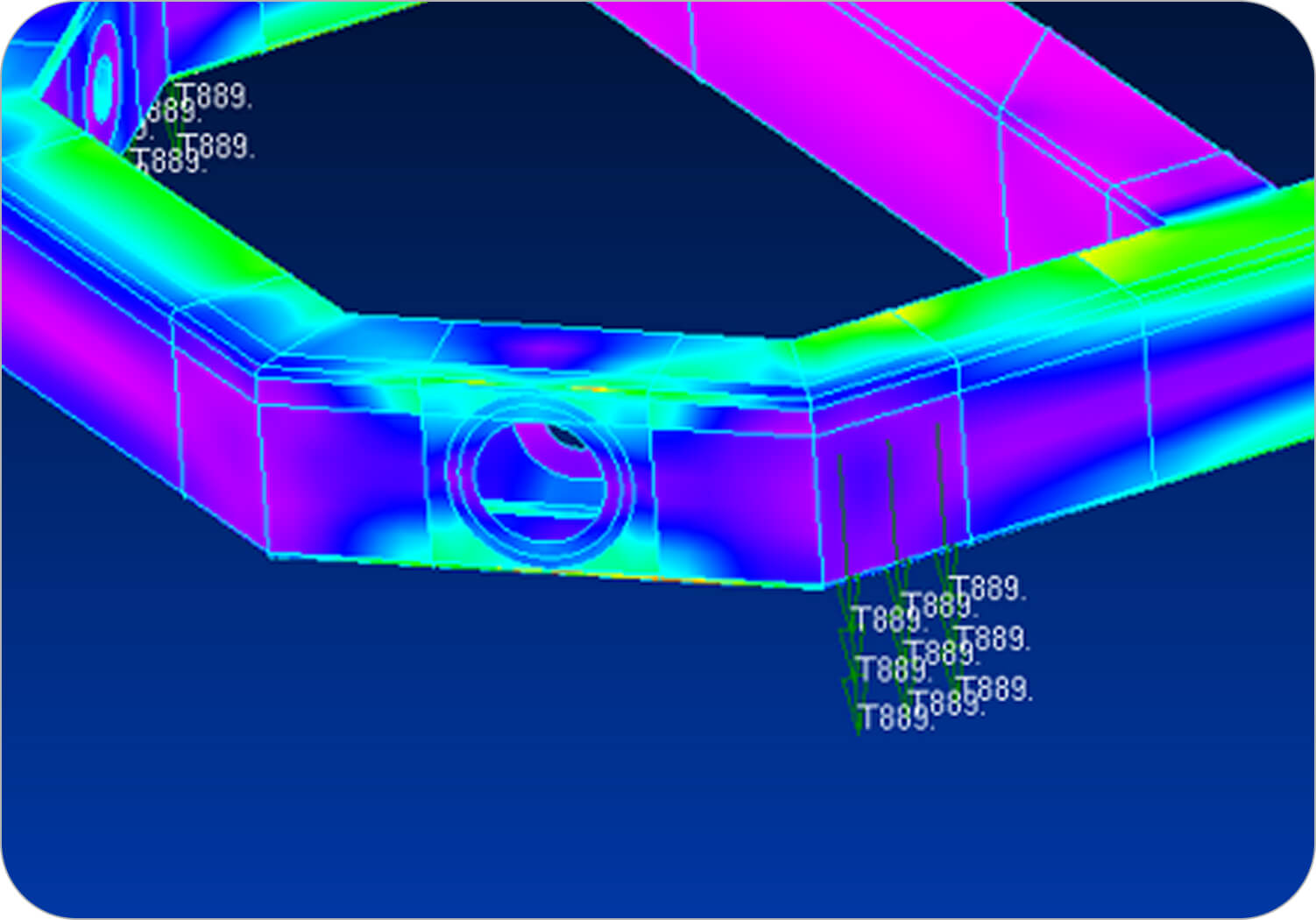

Finite Element Analysis (FEA) is a simulation technique that breaks down complex parts into small elements to predict how they respond to real-world loads. Element 6 Composites uses FEA, specifically with NEiNastran, to optimize carbon fiber composite designs by simulating stress, strain, deflection, and safety margins. This enables stronger, lighter, and more cost-effective part designs for industries such as aerospace, robotics, and medical devices. Note: FEA results depend on accurate input data and may require physical validation for highly specialized applications. Learn more about analysis services.
Element 6 Composites specializes in simulation of carbon fiber and composite laminates under structural loading. Capabilities include stress and strain mapping across plies, panel deflection and stiffness predictions, inter-laminar shear analysis near joints and fasteners, safety margin checks against material limits, and optimization of layup, thickness, and core choice. These insights help create structurally sound, manufacturable components. Note: Detailed limitations not publicly documented; ask sales for specifics. Learn more.
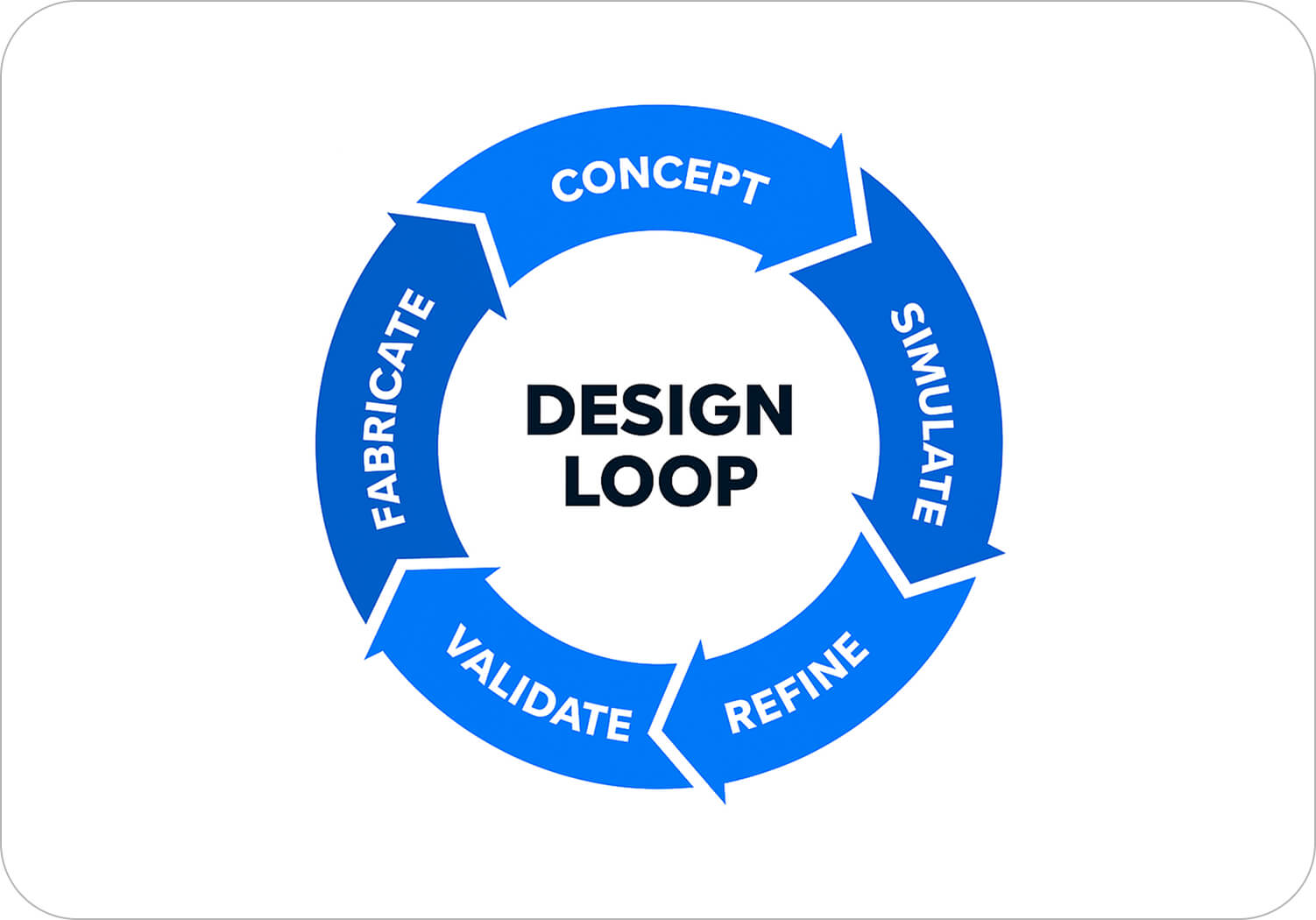
Element 6 Composites works within customer constraints to ensure each simulated solution is practical for manufacturing. This includes hand layup or prepreg processes, sandwich panels with core material options, co-curing, bonding, or fastening assemblies, and realistic tolerance and tooling considerations. Simulation engineers collaborate directly with customers to refine layups, evaluate weight-saving options, and maintain design intent from concept through production. Note: Some manufacturing constraints may require additional review; contact the team for specifics. Learn more.
Customers receive actionable outputs including clear laminate schedules and ply specifications, core and bonding recommendations, guidance for tooling and layup, and engineering-level confidence in performance. These deliverables bridge the gap between digital simulation and physical manufacturing. Note: Deliverables may vary based on project scope; confirm details with the team. Learn more.
Industries that benefit include aerospace, robotics, medical devices, defense, wind energy, photography/media, and nuclear. Case studies show successful projects such as wall-climbing robots for nuclear environments, UAV control vanes, marine defense enclosures, and aerial photography mounts. Note: Some highly specialized industries may require additional validation; contact Element 6 Composites for details. See case studies.
Customers can expect cost savings through reduced development time and fewer physical prototypes, performance optimization via simulation-informed design, and market differentiation with lighter, stronger, and more reliable products. Case studies demonstrate improved payload capacity, manufacturing consistency, and weight savings. Note: Business impact depends on project scope and industry; discuss specifics with Element 6 Composites. Explore prototyping services.
Element 6 Composites collaborated with International Climbing Machines to develop a composite chassis for a wall-climbing robot used in nuclear and wind turbine environments, improving performance and payload. For AAI Corporation, they engineered carbon fiber control vanes for UAVs, achieving high tolerances and manufacturing consistency. Frontier Electronic Systems benefited from a composite electrical enclosure for marine defense, validated for waterproofing and EMI shielding. Note: Not all case studies are publicly detailed; contact Element 6 Composites for more examples. Read more.
Element 6 Composites provides resources such as The Ultimate Guide to Carbon Fiber Design and Application, explanations of carbon fiber fundamentals, details on composite materials, and computational analysis methods. These resources help customers understand and utilize carbon fiber engineering effectively. Note: Some documentation may require direct request; visit the technical info page for access. View technical resources.
Pricing is based on part geometry, material selection, laminate schedule, tolerances, quantity, tooling requirements, finishing, secondary operations, and project timeline. Element 6 Composites does not provide quotes without sufficient information; customers are encouraged to share detailed project requirements for accurate pricing. Note: Pricing details are not published; contact Element 6 Composites for a custom quote. Request a quote.
Implementation timelines vary: a design review typically takes a few weeks, while a full design-prototype-production program can take several months depending on project complexity. Customers can initiate projects via phone or contact page, and upload drawings for a free design review. Note: Timelines depend on project scope; confirm with Element 6 Composites for specifics. Get started.
Customers can easily start by contacting Element 6 Composites via phone (315-252-2559) or through the contact page. A free design review is available for uploaded drawings or requirements, and consultation services help refine project scope. Educational resources support onboarding and project understanding. Note: Some projects may require additional information for onboarding; contact the team for guidance. Start your project.
Element 6 Composites is ISO 9001:2015 certified, ensuring rigorous quality management standards and consistent, high-quality products. This certification provides customers with confidence in reliability and compliance. No information is available regarding other certifications such as SOC2. Note: For further details, contact Element 6 Composites directly. View certification.
Element 6 Composites has collaborated with customers across industries such as nuclear, aerospace, robotics, defense, wind energy, and photography/media. Specific company names include International Climbing Machines, AAI Corporation, Remote Aerial Tripod Specialists Inc., and Frontier Electronic Systems. Logos of additional customers are available on the customer showcase section. Note: Not all customer names are publicly listed; see the showcase for more. View customer logos.