Frequently Asked Questions

Carbon Fiber Manufacturing Methods
What are the main carbon fiber manufacturing methods offered by Element 6 Composites?

Element 6 Composites specializes in several carbon fiber manufacturing methods, including Wet Layup, Pultrusion, Prepreg Lay-Up, and Vacuum-Assisted Resin Transfer Molding (VARTM). Each method is selected based on the part's geometry, production volume, and required properties. The company also utilizes vacuum bagging, matched tooling, and proprietary non-traditional methods to meet diverse project needs. Learn more.

What is the Wet Layup method and when is it used?

The Wet Layup method involves laying carbon fibers onto a mold, wetting them with resin, and removing excess resin before curing. This process is ideal for small-volume or complex, difficult-to-mold parts due to its flexibility and low cost, making it suitable for prototyping or custom shapes. However, it is less efficient for large-scale production and requires skilled labor. Source.

What are the advantages and disadvantages of the Wet Layup process?

Advantages include versatility for any size or shape, low cost, and suitability for prototyping or small-scale production. Disadvantages are lower efficiency for large-scale production and the need for skilled labor to ensure quality. Source.

How does the Pultrusion method work and what parts is it best for?

Pultrusion involves pulling carbon fibers through a resin bath and a heated die, aligning fibers axially and creating strong, lightweight products. It is best for producing long, straight parts such as beams, strips, or tubing. Pultruded products have high bending strength but are limited to straight geometries and have lower transverse strength. Source.

What are the pros and cons of Pultrusion for carbon fiber manufacturing?

Pultrusion is efficient for large-scale production of long, straight parts and offers high strength-to-weight ratios. However, it is limited to straight geometries and parts may be susceptible to crushing or splitting under side loads due to fiber orientation. Source.

What is Prepreg Lay-Up and what applications is it best suited for?

Prepreg Lay-Up uses carbon fiber pre-impregnated with resin and partially cured, which is then cured under heat and pressure. This method is best for producing flat parts, panels, sheets, or tubes, offering high strength and stiffness. It is less suitable for complex shapes due to limited drapability. Source.

What are the advantages and disadvantages of Prepreg Lay-Up?

Advantages include efficient production of flat parts or tubes with high strength and stiffness. Disadvantages are difficulty in draping over complex shapes and limited suitability for parts with compound curvature. Source.

How does Vacuum-Assisted Resin Transfer Molding (VARTM) work?

VARTM involves placing carbon fiber material on a tool under a vacuum bag, pulling a vacuum, and transferring resin into the fiber before curing under heat and pressure. This method is ideal for producing strong, lightweight parts with complex geometry, such as sailboat hulls or motorcycle fairings. Source.

What are the pros and cons of VARTM for carbon fiber parts?

VARTM is preferred for complex or large parts and allows careful fiber placement before resin application. However, it requires a complex setup with more tooling and is less efficient for small, simple parts. Surface finish may be less visually appealing for flat parts. Source.

How do I choose the right carbon fiber manufacturing method for my project?

The best manufacturing method depends on part size, geometry, production quantity, and desired properties like tensile strength. Consulting with a qualified firm like Element 6 Composites, which has expertise in all major methods, ensures the optimal process is selected for your application. Source.

What expertise does Element 6 Composites bring to carbon fiber manufacturing?

Element 6 Composites is a leading expert in wet layup, pultrusion, prepreg lay-up, VARTM, vacuum bagging, matched tooling, and proprietary methods. Their team provides guidance on process selection and delivers high-quality, custom carbon fiber solutions for complex applications. Source.

Can Element 6 Composites help with custom carbon fiber projects?

Yes, Element 6 Composites offers custom carbon fiber manufacturing for unique projects. You can request a quote or consultation by emailing or calling 315-252-2559. Contact us.

What factors should I consider when selecting a carbon fiber manufacturing process?

Key factors include the size and geometry of the part, production volume, required mechanical properties, and cost considerations. Consulting with experts ensures the process aligns with your project's technical and business goals. Source.

Does Element 6 Composites provide engineering and design services for carbon fiber parts?

Yes, Element 6 Composites offers engineering and design services, including CAD modeling, simulation, and prototyping, to ensure optimal part performance and manufacturability. Explore services.

Where can I find more technical information about carbon fiber manufacturing?

Technical resources such as 'The Ultimate Guide to Carbon Fiber Design and Application' and detailed documentation on composite materials and computational analysis are available on the Element 6 Composites website. Read the guide.

How can I request a quote or consultation for my carbon fiber project?

You can request a quote or consultation by contacting Element 6 Composites via their contact page or by calling 315-252-2559. They offer free design reviews and personalized support for new projects.

Features & Capabilities

What are the key features of Allred & Associates' carbon fiber products?

Key features include a high strength-to-weight ratio, durability, corrosion resistance, advanced simulation tools (such as Finite Element Analysis), regulatory compliance for medical and defense applications, and custom engineering for weight and performance optimization. Source.

Does Allred & Associates offer prototyping and design validation services?

Yes, Allred & Associates provides high-quality prototyping services, allowing customers to test and validate designs before full-scale production, reducing risks and ensuring optimal performance. Learn more.

What engineering capabilities does Allred & Associates provide?

Allred & Associates offers advanced engineering services, including Solidworks CAD design, Nastran FEA, Mastercam CNC tool path design, prototyping, and in-house tool design, ensuring precision and innovation in product development. Learn more.

Are Allred & Associates' products ISO 9001:2015 certified?

Yes, Allred & Associates operates an ISO 9001:2015-certified facility, ensuring high-quality production standards and consistent product reliability. Source.

What technical documentation is available for Allred & Associates' products?

Technical documentation includes 'The Ultimate Guide to Carbon Fiber Design and Application,' material property guides, computational analysis resources, downloadable CAD models, and a carbon fiber glossary. Access resources.

Use Cases & Benefits

What industries benefit from Allred & Associates' carbon fiber solutions?

Industries served include aerospace and defense, medical devices, robotics and automation, industrial automation, and the music industry. Solutions are tailored to meet the unique requirements of each sector. Source.

Who are the typical users of Allred & Associates' products?

Typical users include engineers (mechanical, aerospace, materials), product designers, project managers, and decision-makers in procurement and technical roles across various industries. Source.

What business impact can customers expect from using Allred & Associates' products?

Customers can expect cost savings, improved product performance, accelerated time-to-market, regulatory compliance, operational efficiency, and risk reduction through advanced simulation and prototyping. Source.

Can you share examples of successful projects or case studies?

Yes, notable case studies include marine defense enclosures for Frontier Electronic Systems, drone test bed systems for Eureka Dynamics, wall-climbing robots for International Climbing Machines, aerospace rockets for student organizations, and lightweight guitars for the music industry. Read more.

How does Allred & Associates address common customer pain points?

Allred & Associates addresses pain points such as high manufacturing costs, complex processes, regulatory challenges, and weight optimization through advanced simulation, end-to-end services, regulatory expertise, and custom engineering. Source.

What problems do Allred & Associates' products solve?

Products solve problems including high manufacturing costs, complex manufacturing processes, localized stress concentrations, regulatory compliance, weight and performance optimization, prototyping challenges, and material handling safety. Source.

Pricing & Plans

How is pricing determined for Element 6 Composites and Allred & Associates products?

Pricing for standard products is transparently listed on the DragonPlate website. For custom projects, pricing is based on material preferences, dimensions, tolerances, and performance criteria, ensuring customers pay only for what they need. View standard pricing.

Does Allred & Associates offer long-term value in its pricing?

Yes, the company emphasizes the durability, lightweight nature, and superior performance of its composites, which lead to reduced maintenance costs, improved efficiency, and long-term savings for customers. Source.

Competition & Comparison

How does Allred & Associates compare to other carbon fiber manufacturers?

Allred & Associates differentiates itself through advanced simulation tools (FEA), end-to-end services (design, prototyping, manufacturing), regulatory compliance expertise, and ISO 9001:2015 certification. This comprehensive approach ensures tailored, high-performance solutions for diverse industries. Source.

What makes Allred & Associates a preferred choice for carbon fiber solutions?

Customers choose Allred & Associates for cost efficiency, comprehensive services, advanced simulation, regulatory compliance, weight and performance optimization, and high-quality prototyping. These factors combine to deliver reliable, cost-effective, and innovative solutions. Source.

Are there advantages for different user segments when choosing Allred & Associates?

Yes, aerospace and defense benefit from weight reduction and durability; medical devices from biocompatible, radiolucent materials; robotics from lightweight, strong components; and industrial automation from durable, corrosion-resistant parts. Source.

Support & Implementation

How easy is it to start a project with Allred & Associates?

Starting is simple: customers can upload drawings for a free design review, access prototyping services, and communicate directly with the team for personalized support. The onboarding process is streamlined to minimize delays and ensure a smooth start. Get started.

What is the typical implementation timeline for a carbon fiber project?

The timeline depends on project complexity, but Allred & Associates accelerates development with free design reviews, prototyping, and direct communication, ensuring efficient project kickoff and reduced risk. Source.

What support resources are available for customers?

Support resources include free design reviews, technical documentation, direct access to engineering teams, and comprehensive prototyping and manufacturing services. Contact support.

Product Information

What is the primary purpose of Allred & Associates' carbon fiber products?

The primary purpose is to deliver high-performance composite solutions that solve complex technical challenges, optimize weight and strength, and meet stringent regulatory and performance requirements across industries. Source.

What brands operate under Allred & Associates?

Allred & Associates operates five brands: DragonPlate (advanced composite materials), Element6 Composites (design and prototyping), Armadillo Tactical Gear (tactical gear), Gemini Carving Duplicators (wood carving machines), and Gemini Musical (musical instrument components). Source.

Who are some of Allred & Associates' customers?

Customers include Frontier Electronic Systems (marine defense), Eureka Dynamics (drone technology), International Climbing Machines (robotics), student aerospace organizations, and music industry manufacturers. See case studies.

What materials are used in Allred & Associates' composite products?

Products are made from carbon fiber-reinforced plastic (CFRP) and other advanced composite materials, including aramid fibers, tailored for high strength, durability, and specific industry requirements. Learn more.

Carbon Fiber Manufacturing Methods

Common Carbon Fiber Manufacturing Methods

Wet Layup

In this method, carbon fibers are laid onto a mold, wetted with resin, and rolled or squeegeed to remove excess resin. The layup can be left open or a vacuum bag applied. It is then cured under room temperature or with heat and pressure to create a carbon fiber composite part. This method is commonly used for smaller volume and complex, difficult-to-mold parts.

Advantages:

  • A simple and versatile method that can be used to create parts of any size or shape.
  • Relatively low-cost, making it a good option for prototyping or small-scale production.
  • A flexible process facilitates the production of hard-to-make parts.

Disadvantages:

  • Not as efficient as other carbon fiber composite manufacturing methods, making it less suitable for large-scale production.
  • Requires skill and experience in the layup process.

Pultrusion

Pultrusion involves pulling carbon fibers through a thermoset resin bath and then through a heated die. This process aligns the carbon fibers axially and wets them with resin, creating a strong and lightweight product. Pultrusion is typically used for the production of long, straight parts such as beams, strips, or tubing.

Advantages:

  • Well suited for the production of long, straight parts.
  • A relatively efficient method, making it suitable for large-scale production.
  • Pultruded products have high bending strength and a high strength-to-weight ratio.

Disadvantages:

  • Limited to straight parts
  • Pultruded parts have low transverse strength due to the fiber orientation and can be crushed or split by a side load.

Prepreg Lay-Up

Prepreg is carbon fiber wetted with resin and partially cured, so it has the consistency of tar paper. It is cured under heat and pressure. Parts made from prepreg are strong and lightweight with higher stiffness and strength and are well suited for use in a variety of high-end applications. Prepreg lay-up is normally used for the production of flat parts such as panels or sheets, or parts with cylindrical curvature because prepreg material will not drape well over compound curvatures.

Advantages:

  • Well suited for the production of flat parts, or tubes.
  • A relatively efficient method, making it suitable for large-scale production.

Disadvantages:

  • Not well suited for the production of parts with complex shapes.
  • Prepreg is difficult to drape on a tool with compound curvature.

Vacuum-Assisted Resin Transfer Molding (VARTM)

Manufacturing carbon fiber components with vacuum-assisted resin transfer molding (VARTM) involves placing the carbon fiber material on a tool under a vacuum bag, pulling a vacuum on the bag,  transferring the resin by vacuum into the fiber, and curing the composite under heat and pressure. This process results in strong and lightweight parts that are well suited for use in a variety of applications. VARTM is best used for the production of parts with complex geometry, such as sailboat hulls or motorcycle farings because the process allows time to carefully lay the carbon fiber in the tool before mixing and applying the resin.

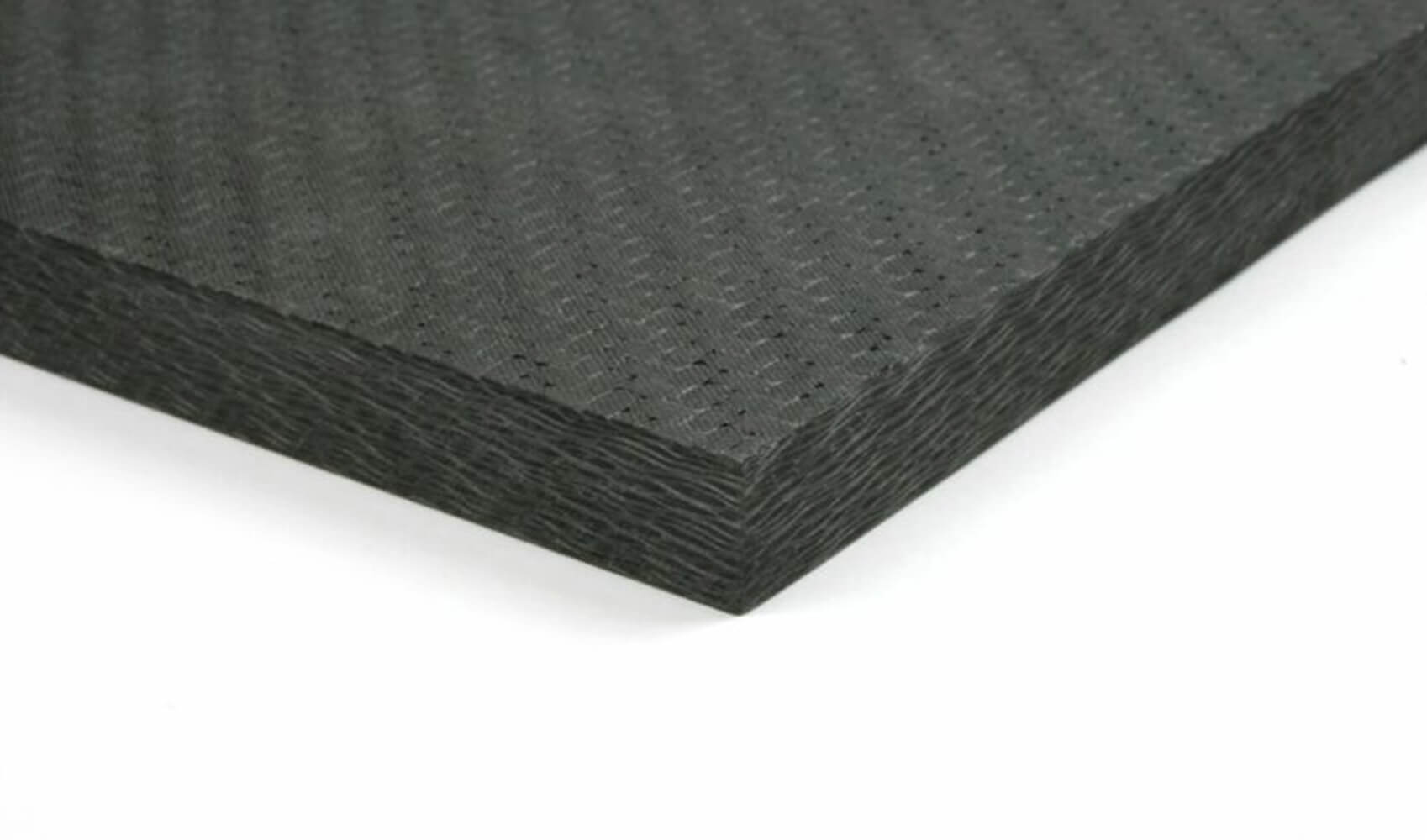
Flat parts such as large sheets and plates can be molded less expensively via resin transfer, but the surface finish is not as beautiful. The individual carbon fiber tows have a flattened appearance where the texture of the individual fibers is less visible.

Advantages:

  • A preferred method to produce parts with complex geometry or very large parts.

Disadvantages:

  • A complex setup with more tooling and materials is required.
  • Not efficient for smaller simpler parts.

Choosing a Carbon Fiber Manufacturing Process

In conclusion, when choosing a carbon fiber manufacturing process it is important to weigh the pros and cons of each process. The best manufacturing method for a particular application will depend on factors such as the size and geometry of the part, the quantity to be produced, and the desired properties of the finished product, such as high tensile strength.

Working with a qualified firm that has extensive knowledge in carbon fiber manufacturing methods is imperative when embarking on a project. Element 6 is a leading expert in wet layup, pultrusion, prepreg lay-up, and VARTM, in addition to vacuum bagging, matched tooling, and other non-traditional proprietary methods.

For more information or to request a quote on a custom carbon fiber manufacturing project, please send us an email or give us a call at 315-252-2559. 

View All Articles

Carbon Fiber Specialists​

© 2025 Element 6 Composites. All Rights Reserved